


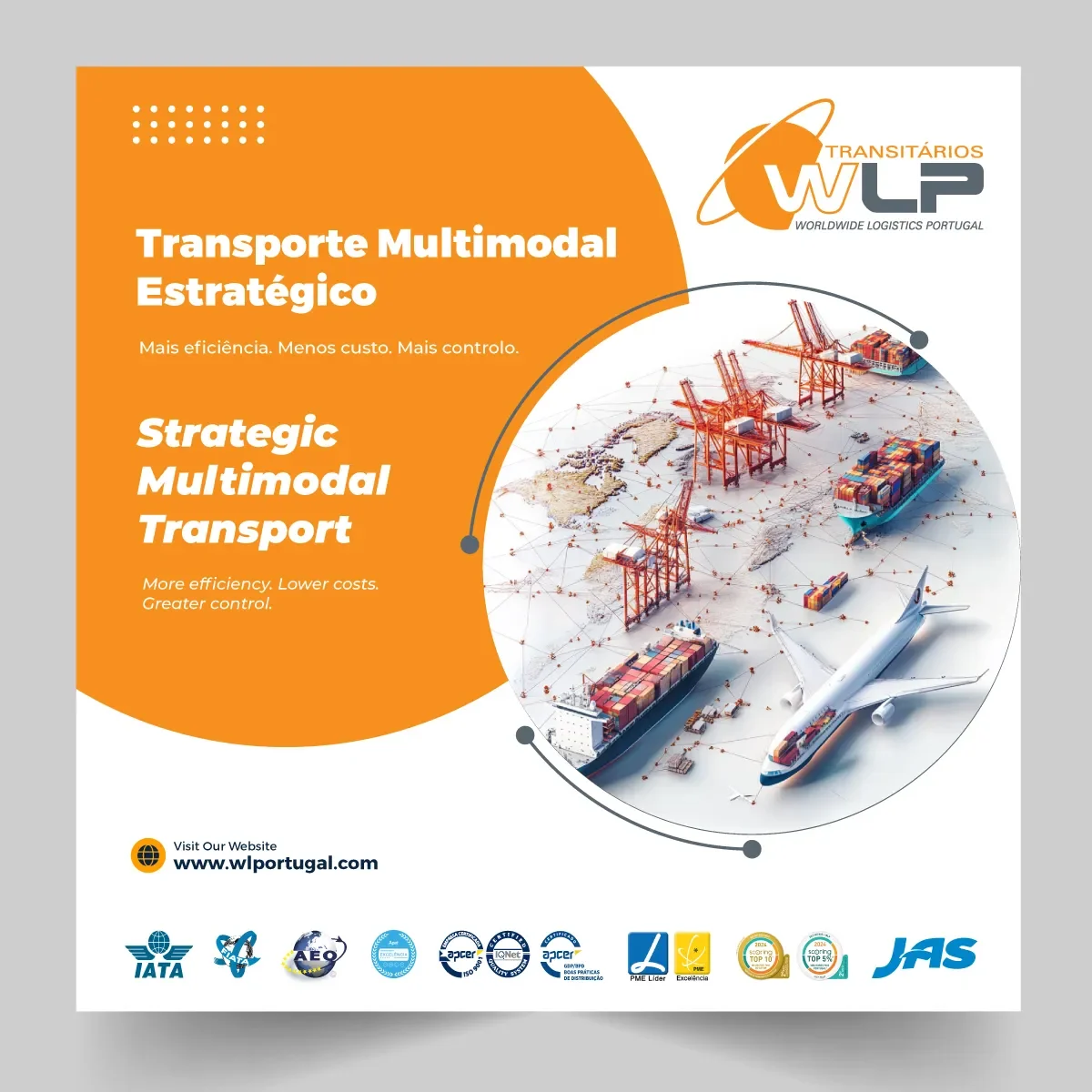
Strategic Multimodal Transport: How to Optimize Costs and Gain Competitive Advantage
In an increasingly competitive global environment, where timing, costs, and reliability are critical, strategic multimodal transport plays a central role in how companies export and import goods.
More than simply combining different transport modes, it is an integrated approach that enables businesses to optimize logistics operations and reduce risks across the entire supply chain.
What is Multimodal Transport?
Multimodal transport involves the use of two or more modes of transportation (sea, road, rail, or air) under a single logistics contract.
This approach allows companies to:
- Adapt to different markets and geographies
- Improve operational efficiency
- Reduce overall transportation costs
However, when applied strategically, multimodal transport goes far beyond simply combining modes.
What Makes Strategic Multimodal Transport Different?
Adopting a multimodal strategy is not just about choosing alternative routes — it means intelligently planning every stage of the logistics operation.
A strategic model takes into account:
- Total costs (not just freight rates)
- Transit time and predictability
- Geopolitical and operational risks
- Environmental impact and sustainability
- Infrastructure availability across routes
Companies that adopt this approach can respond more quickly to market changes and minimize disruptions in the supply chain.
Key Benefits for Exporters and Importers
✔️ Cost Reduction
Combining sea or rail transport with road transport can significantly reduce costs compared to purely air or road solutions.
✔️ Greater Operational Flexibility
Ability to adjust routes based on constraints such as port congestion, strikes, or geopolitical restrictions.
✔️ Improved Risk Management
Diversifying transport modes reduces dependency on a single logistics channel.
✔️ Sustainability
Integrating rail or sea transport helps reduce the carbon footprint of logistics operations.
When Does Multimodal Transport Make Sense?
Strategic multimodal transport is especially relevant when:
- There are long distances between origin and destination
- There is a need to balance cost and delivery time
- Shipment volumes justify logistics optimization
- Operational constraints affect certain transport modes
Each operation should be individually assessed to ensure the most efficient solution.
The Role of a Specialized Logistics Partner
Implementing an effective multimodal strategy requires technical expertise, an international network, and strong planning capabilities.
A specialized logistics partner helps to:
- Identify the most efficient routes
- Coordinate multiple transport modes
- Ensure customs and documentation compliance
- Monitor operations in real time
Talk to Experts
Is your company making the most of multimodal transport?
Conclusion
In a global scenario marked by uncertainty and constant change, strategic multimodal transport is no longer optional — it is a real competitive advantage.
Companies that invest in an integrated approach can not only reduce costs but also gain agility, resilience, and sustainable growth in international markets.


