


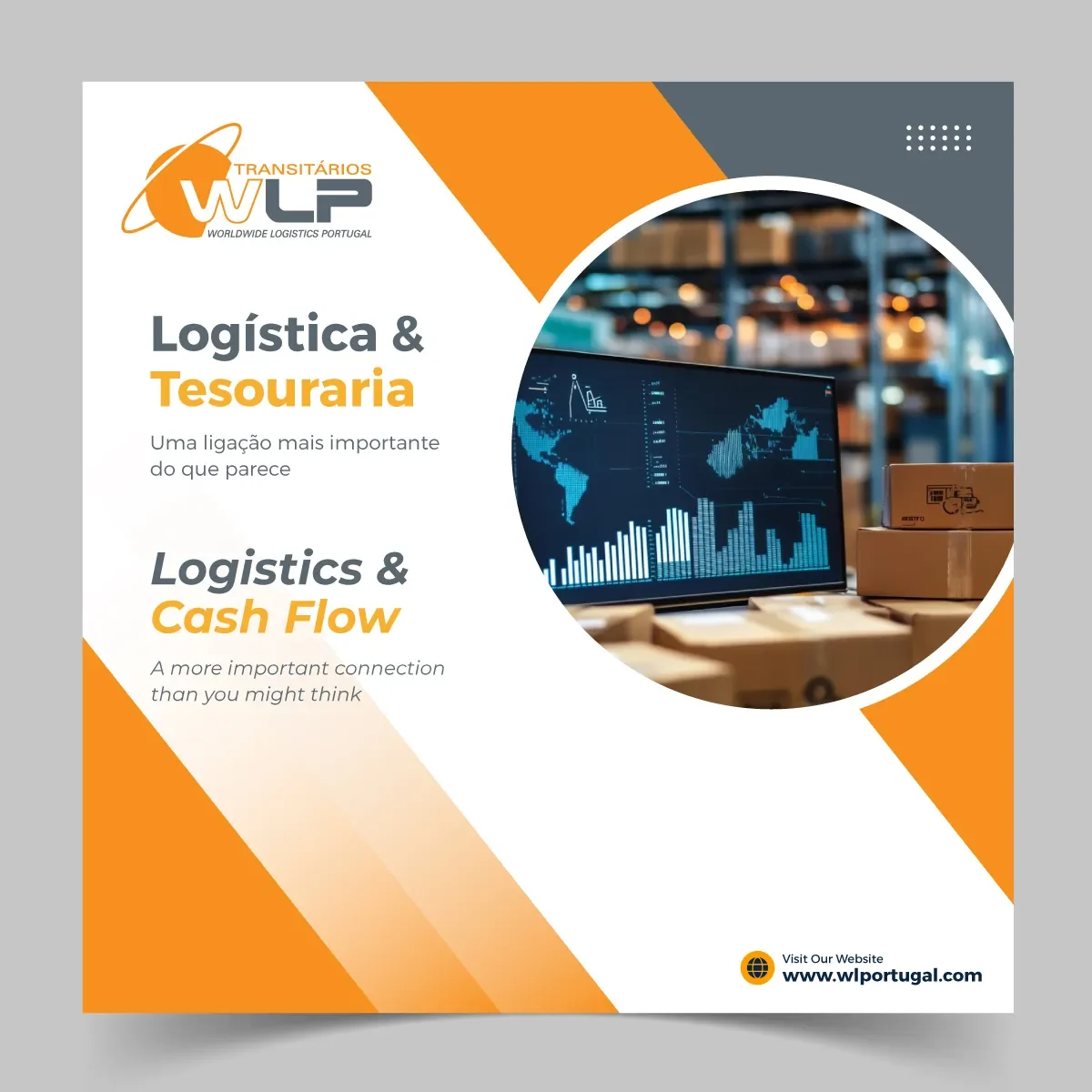
How Logistics Influences Your Company’s Cash Flow
When discussing international logistics, most companies immediately think about transportation, delivery times, or operational costs. However, there is a frequently overlooked aspect that can have a significant impact on a company’s financial health: cash flow management.
Logistics decisions directly influence cash flow, working capital, and a company’s financial flexibility. For this reason, logistics should be viewed not only as an operational function but also as a strategic financial management tool.
The Link Between Logistics and Cash Flow
Every import or export operation involves a combination of costs, lead times, and financial commitments that affect a company’s liquidity.
From the moment an order is placed until the goods are delivered and invoiced to the final customer, there is a period during which capital is invested without generating immediate returns.
The longer this cycle, the greater the pressure on cash flow.
Efficient logistics management helps reduce this gap and improve financial availability.
The Impact of Transit Times
Transit times directly influence the amount of capital tied up in inventory.
Consider a company importing products from Asia by sea freight. Between production, transportation, customs clearance, and distribution, several weeks may pass before the products are available for sale.
During this period, the investment has already been made, but revenue has not yet been generated.
Optimising routes, selecting the most appropriate transport modes, and planning operations in advance can help reduce this impact and improve financial predictability.
Excess Inventory Means Idle Capital
Many companies maintain inventory levels above what is actually required to prevent stock shortages.
While this strategy may increase operational security, it also generates significant financial costs.
Every product stored in a warehouse represents capital that could be invested elsewhere within the business.
An integrated logistics strategy helps balance product availability with financial efficiency, reducing storage costs and freeing up financial resources.
The Consequences of Stock Shortages
If excess inventory can put pressure on cash flow, insufficient inventory can reduce revenue.
Product shortages may result in lost sales, contractual non-compliance, and customer dissatisfaction.
For this reason, logistics management should seek the right balance between inventory levels, forecast demand, and replenishment lead times.
Information, visibility, and planning capabilities become essential factors in reducing financial risk.
Choosing a Transport Mode Is Also a Financial Decision
Companies often evaluate transportation options based solely on freight costs.
However, the choice between sea, air, or multimodal transport can have much broader financial implications.
Sea freight may offer lower upfront costs but significantly increase transit times and the amount of capital tied up in goods.
Air freight, while more expensive, may allow for faster inventory turnover and improved cash flow.
The analysis should therefore focus on the total cost of the operation rather than the transportation cost alone.
Logistics Planning and Financial Predictability
Companies that integrate logistics into their financial strategy are able to anticipate cash flow requirements more accurately.
Better predictability allows organisations to:
- Plan purchasing and procurement activities more effectively;
- Reduce financing costs;
- Minimise urgent and unexpected situations;
- Improve working capital management;
- Support investment and growth decisions.
Logistics therefore becomes more than an operational function and contributes directly to a company’s financial stability.
Logistics and Competitiveness Go Hand in Hand
In an increasingly competitive business environment, the ability to efficiently manage both physical and financial flows has become a strategic advantage.
Companies that understand the relationship between logistics and cash flow can make better decisions, optimise resource allocation, and strengthen their ability to adapt to market changes.
Modern logistics is no longer just about moving goods. It is also about protecting margins, improving liquidity, and supporting sustainable business growth.
Does your company fully understand the impact that logistics decisions have on cash flow and financial performance?
At WLP, we help importers and exporters develop logistics solutions that combine operational efficiency with financial sustainability.


