


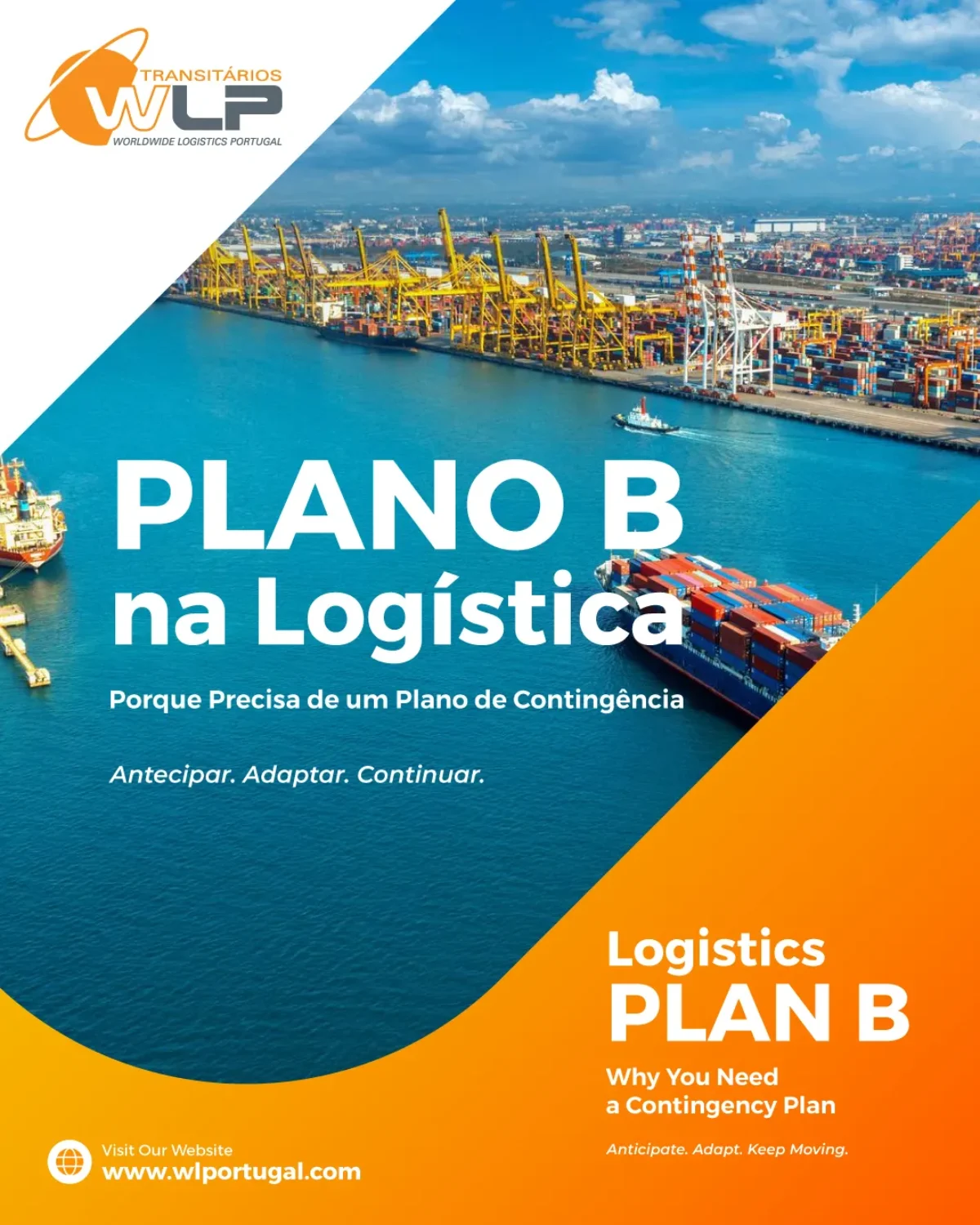
Logistics Plan B: Why You Need a Contingency Plan
When a route is no longer viable, a connection is cancelled or a port faces disruption, the difference between a problem and a crisis may lie in having an alternative prepared in advance.
In international transport, things do not always go according to plan.
Port congestion, adverse weather conditions, strikes, service changes, capacity shortages, delays, operational constraints or changes in the international environment can affect an operation that initially seemed perfectly planned.
Some situations are difficult to predict. But that does not mean companies cannot prepare for them.
This is precisely where a Logistics Contingency Plan comes into play.
More than an emergency solution, it is about anticipating scenarios, identifying alternatives and establishing priorities before a problem arises.
Because when a route fails, starting to look for a solution may already be too late.
What Is a Logistics Contingency Plan?
A Logistics Contingency Plan defines in advance how a company can respond to events that may compromise the normal operation of its supply chain.
It does not mean predicting every possible problem.
It means identifying the most relevant risks for each operation and understanding which alternatives are available should any of those risks materialise.
Depending on the operation, this may involve considering:
- alternative routes;
- alternative ports or airports;
- different carriers or services;
- other modes of transport;
- multimodal solutions;
- alternative suppliers;
- adjustments to stock levels;
- priorities between different goods or orders;
- communication and decision-making procedures.
The objective is simple: to reduce the time needed to respond when something does not go according to plan.
When the Problem Is Neither at Origin nor Destination
In an international operation, there is a long chain of events between the departure of the goods and their arrival at the final destination.
A disruption at a transshipment port, the cancellation of a connection, a change in service frequency or a lack of capacity on a particular service can affect the entire operation.
This is why analysing only the origin and destination may not be enough.
It is necessary to understand the entire journey of the goods and identify the points where exposure to risk is greatest.
The greater this visibility, the greater the ability to prepare alternatives.
Having an Alternative Does Not Simply Mean Choosing Another Route
One of the most important principles of a Logistics Contingency Plan is that an alternative is only truly useful if it is operationally viable.
Changing ports, for example, may require changes to inland transport, schedules, documentation procedures or even the costs associated with the operation.
Switching from sea freight to air freight may significantly reduce transit time, but it can also represent a substantial increase in cost.
Road or rail transport may provide an effective alternative in certain geographical areas, but not necessarily in others.
A genuine Plan B is therefore not simply about identifying a second option.
It is about understanding in advance when that option should be used, what impact it will have and what resources will be required to put it into practice.
Not All Goods Have the Same Priority
Another fundamental consideration is that not all operations require the same level of contingency planning.
Goods intended to replenish stock with several weeks of flexibility do not have the same level of criticality as a component required to keep a production line running.
Similarly, perishable goods, high-value cargo or orders associated with specific commercial commitments may require different strategies.
A Logistics Contingency Plan should therefore consider factors such as:
Criticality of the goods
What would be the impact of a delay?
Time available
How much flexibility is there before the delay begins to affect the operation?
Value of the goods
Is the cost of an alternative solution proportionate to the risk we are trying to avoid?
Stock availability
Is there sufficient safety stock to absorb a temporary disruption?
Transport flexibility
Is it possible to change the route, service or mode of transport?
This analysis makes it possible to establish different levels of response and avoid decisions being made exclusively under pressure.
The Cost of Reacting Too Late
When there is no previously assessed alternative, decisions tend to be made in a context of urgency.
And urgency often comes at a cost.
It may mean resorting to air freight when an alternative sea freight solution could have been possible, accepting more expensive services due to limited capacity, or incurring additional storage, handling and transport costs.
But the impact can go far beyond the logistics cost itself.
A delay can lead to stock shortages, production stoppages, missed customer deadlines or lost business opportunities.
For this reason, the cost of a logistics disruption should not be measured solely by the additional cost of transport.
It should also take into account the impact that disruption may have on the business.
A Plan B Starts Before You Need It
It is difficult to assess alternatives properly when goods are already held up, a customer is waiting for a delivery or a factory urgently needs a particular component.
The best time to assess a contingency is before it happens.
This means understanding the operation, identifying its critical points and asking some questions in advance:
- What happens if this route becomes temporarily unavailable?
- Is there another port that could be used?
- Is there an alternative connection?
- Can we combine different modes of transport?
- What would that alternative cost?
- How long would it take to activate?
- Which goods should be prioritised?
- Who makes the decision?
These questions may seem unnecessary when everything is running smoothly.
They become essential when it is not.
Logistics Resilience Does Not Mean Eliminating Risk
No international supply chain can completely eliminate uncertainty.
The objective should be different: to reduce exposure and increase the ability to respond.
A resilient supply chain is not necessarily one where problems never occur.
It is one that can adapt when they do.
This requires information, planning, flexibility and partners capable of analysing different scenarios and finding solutions suited to each operation.
Because in international logistics, having a Plan B does not mean expecting Plan A to fail.
It means being prepared if it does.
Anticipate. Adapt. Keep Moving.
At WLP – Worldwide Logistics Portugal, we believe that an efficient logistics operation goes beyond choosing a route or mode of transport.
It requires understanding the business, assessing risks, analysing alternatives and managing each operation with a global perspective.
Our experience, market knowledge and international network of partners enable us to assess different solutions and adapt each operation to the specific needs of each client.
Is your supply chain prepared to respond when the original plan is no longer the best option?
Talk to our specialists.
At WLP, we help you assess alternatives and find solutions that keep your goods — and your business — moving.
Frequently Asked Questions
What is a Logistics Contingency Plan?
A Logistics Contingency Plan is a set of procedures and alternatives defined in advance to enable a company to respond to events that may affect its supply chain, such as delays, route unavailability, capacity shortages or other operational constraints.
What alternatives can be included in a contingency plan?
These may include alternative routes, ports, airports, carriers or services, different modes of transport, multimodal solutions, stock adjustments and specific procedures for goods considered critical.
Does every company need a Logistics Contingency Plan?
The level of planning required depends on the company’s activity, markets, goods and the impact that a logistics disruption could have. The greater the dependence on international supply chains or critical deadlines, the greater the importance of preparing alternatives.
Does a contingency plan increase logistics costs?
Not necessarily. The objective is to understand the available alternatives and their respective impacts in advance. In many cases, preparing a solution before an urgent situation arises can prevent significantly more expensive decisions later.
How often should a Logistics Contingency Plan be reviewed?
It should be reviewed whenever there are relevant changes to the supply chain, suppliers, markets, routes or business requirements. Even without significant changes, periodic reviews are advisable to confirm that the alternatives remain available and appropriate.


