


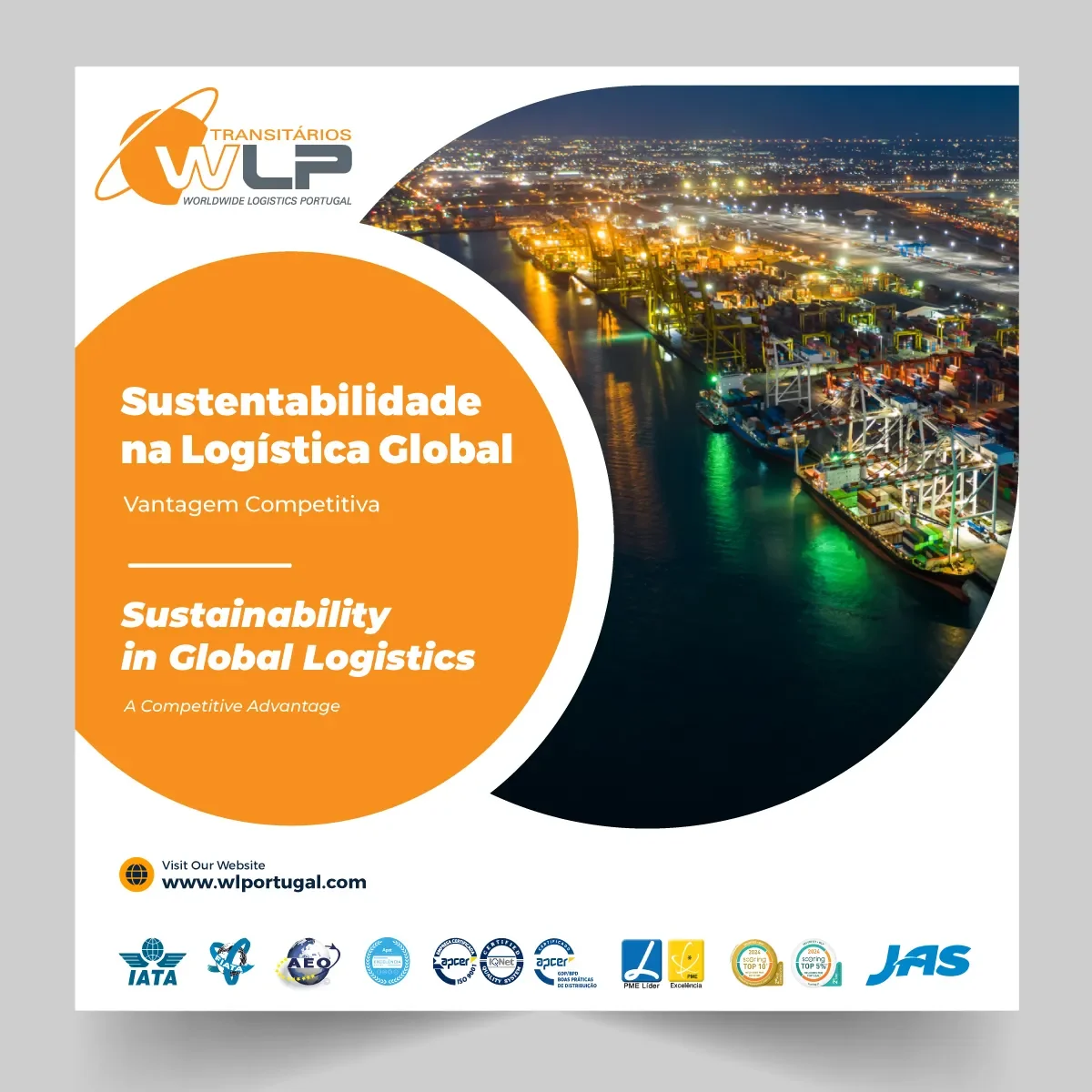
Sustainability in Global Logistics: From Trend to Strategic Imperative
Sustainability in global logistics is no longer a secondary topic — it has become a critical factor for competitiveness. Today, exporting and importing companies face increasing pressure to reduce the environmental impact of their operations while maintaining efficiency and cost control.
In this new landscape, integrating sustainable practices into the logistics chain is no longer just a matter of responsibility — it is a strategic decision.
Why sustainability is now essential in international logistics
Stricter international regulations, combined with pressure from consumers and business partners, are reshaping global trade.
Key drivers include:
- More demanding environmental regulations (especially in the EU)
- ESG criteria increasingly valued by investors
- Growing demand for transparency in supply chains
- Pressure to reduce carbon footprint
Companies that fail to adapt risk losing competitiveness and access to certain markets.
How to implement more sustainable logistics
Sustainability in global logistics is not about a single action, but rather an integrated approach.
1. Optimizing routes and transport modes
Choosing strategically between maritime, rail, air, or road transport can significantly reduce emissions and costs.
2. Cargo consolidation
Reducing the number of shipments through consolidation allows for more efficient use of resources.
3. Digitalization and operational control
Digital tools enable real-time monitoring of consumption, emissions, and operational efficiency.
4. Strategic partnerships
Working with logistics operators aligned with sustainable practices is essential to ensure consistency across the supply chain.
Sustainability and efficiency: a false dilemma
There is still a perception that investing in sustainability necessarily leads to higher costs. However, in most cases, the opposite is true.
Optimizing sustainable logistics processes tends to generate:
- Waste reduction
- Greater operational efficiency
- Improved predictability
- Cost reduction in the medium and long term
In other words, sustainability and profitability can — and should — go hand in hand.
WLP’s role in sustainable logistics
In an increasingly demanding environment, WLP positions itself as a strategic partner for companies aiming to integrate sustainability into their international logistics operations.
Through a consultative approach, WLP supports:
- The definition of more efficient logistics solutions
- The selection of the most appropriate transport modes
- Route and cost optimization
- The integration of practices aligned with ESG criteria
Conclusion
Sustainability in global logistics is not a passing trend — it is a structural transformation of the sector.
Companies that anticipate this shift will be better positioned to grow sustainably, efficiently, and competitively in international markets.


